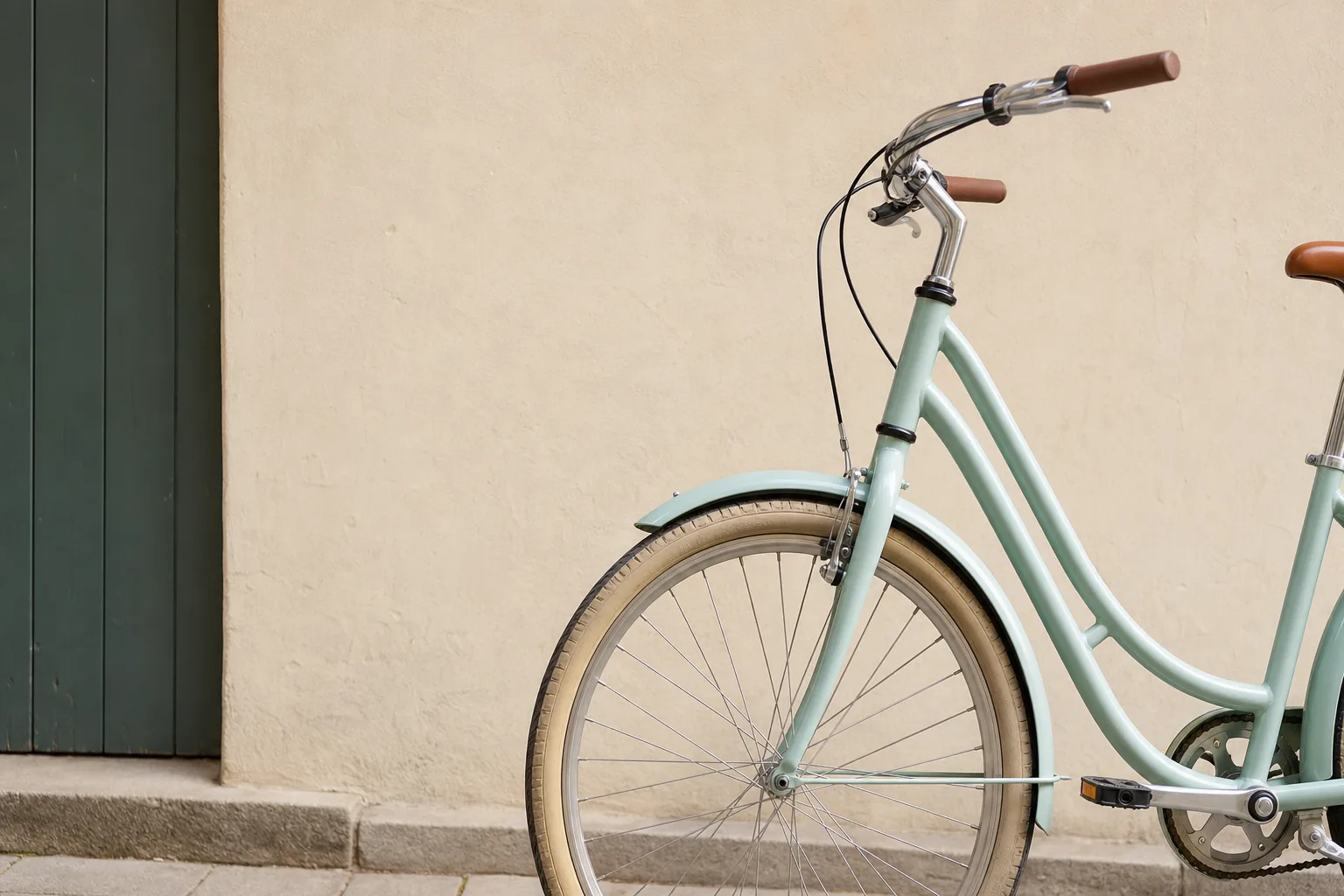
A coaster brake is the simplest stopping system still sold on a new bicycle, and simplicity is exactly why it gets specified on cruisers and Dutch-style uprights at the affordable end of the market. Nothing to adjust, nothing to fray, nothing exposed to salt. The trade is that the whole system lives inside the rear hub, acts on the rear wheel only, and takes its input from a leg rather than a hand. That last detail matters more than the brochures suggest, and it is the one a careful buyer should test before the money changes hands.
What back-pedaling actually does under the wheel
Push back on the pedals and an internal clutch drives a brake shoe against the shell of the hub. The engagement is quick and the range of useful pedal travel is short, which means the difference between a light drag and a locked rear wheel is measured in maybe a quarter of a crank rotation. On dry pavement at walking-to-jogging pace, that is fine. On a wet crosswalk stripe, a sandy shoulder, or wet leaves in a gutter, the rear tire breaks loose and the back of the bike steps sideways before the rider has decided anything. A locked rear wheel on an upright bike is recoverable, but only because the geometry is forgiving, not because the brake is.
The second limit is heat and grade. A rear-only brake is being asked to hold the whole bike on a descent using the tire with the least weight on it, since braking shifts load forward. On a flat neighborhood loop that never comes up. On the back side of a highway overpass, or a parking garage ramp, or the one block of real hill between the reader and the grocery store, it does. Coaster brakes fade when worked continuously, and the fade arrives without warning because there is no lever feedback telling the rider the system is running out.
What a front hand lever adds
A front brake, whether a rim caliper or a hub-mounted drum or roller unit, gives back the thing the coaster brake structurally cannot offer: proportional control. A hand can hold thirty percent of available braking force and stay there for a hundred feet. A leg pushing backward against a crank cannot, because the input is coarse and the ankle has no fine sensor for it. The front wheel also carries more load under braking, so the same effort produces a shorter stop with less drama. The Consumer Product Safety Commission is responsible for the federal requirements that govern bicycles sold in the United States, including how braking systems are specified on new machines, which is part of why front hand brakes appear on so many otherwise simple upright models.
There is a practical benefit that has nothing to do with emergencies. A front hand brake lets the rider hold the bike still while stopped, at a light, on a slight grade, with a foot down and the pedals in whatever position they happen to be. A coaster brake needs a pedal in the rearward half of its stroke to be usable, and if the cranks are parked wrong the rider gets a moment of nothing.
The parts nobody mentions until the bike is home
Walking a coaster-brake bike backwards engages the brake, so the rear wheel drags and skips while the bike is being pulled out of a hallway or reversed into a rack. The workaround is to lift the back end or roll it forward in an arc, which is manageable but should be tried once in the store with a loaded basket. Wheel removal is the bigger friction point. The hub's reaction arm is clamped to the chainstay, so fixing a rear flat means unbolting that arm, freeing the chain, and getting the arm reseated correctly on reassembly. It is a fifteen-minute job that many riders will hand to a shop.
Which combinations are worth the money
Coaster only makes sense on a genuinely flat, dry, short route where the bike lives indoors and someone else handles flats. Coaster plus a front hand brake is the combination most riders should buy, because it costs little, adds modulation, and keeps the low-maintenance rear. Two hand brakes with a freewheel is the right answer for anyone who wants to coast backward, walk the bike freely, or pull a wheel without tools they do not own. Front drum plus coaster is the quiet, weatherproof option worth the premium if the route includes rain.
Squeeze the front lever in the showroom with the bike stationary and lean into it. If the fork chatters or the lever reaches the grip, that is a setup problem to solve before delivery, not after.